
Industrial Engineering · Internal Floating Roofs · Tank Sealing
Internal Floating Roof Seal: Types, Design and Selection for Storage Tanks
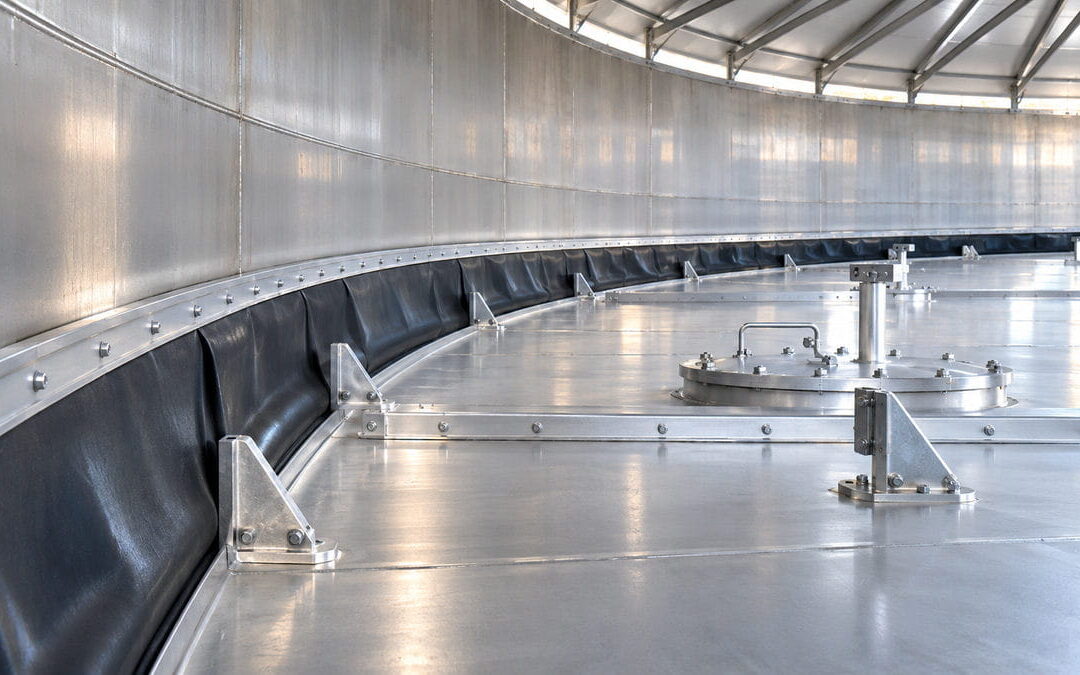
Industrial storage tanks are designed to contain large volumes of petroleum products, chemicals and other liquids while meeting demanding operational and environmental requirements. For facilities using internal floating roofs, controlling vapor movement around the perimeter of the floating deck is an important part of the storage system.
An internal floating roof seal closes the gap between the moving floating roof and the stationary tank shell. It helps limit vapor losses while allowing the roof to rise and fall with the stored liquid.
However, not all internal floating roof seals operate in the same way. Mechanical shoe systems, resilient-filled arrangements and flexible wipers have different characteristics, making proper selection essential.
For tank terminal operators, engineering contractors and maintenance teams, understanding these differences can help improve equipment compatibility, reliability and long-term storage performance.
What is an internal floating roof seal?
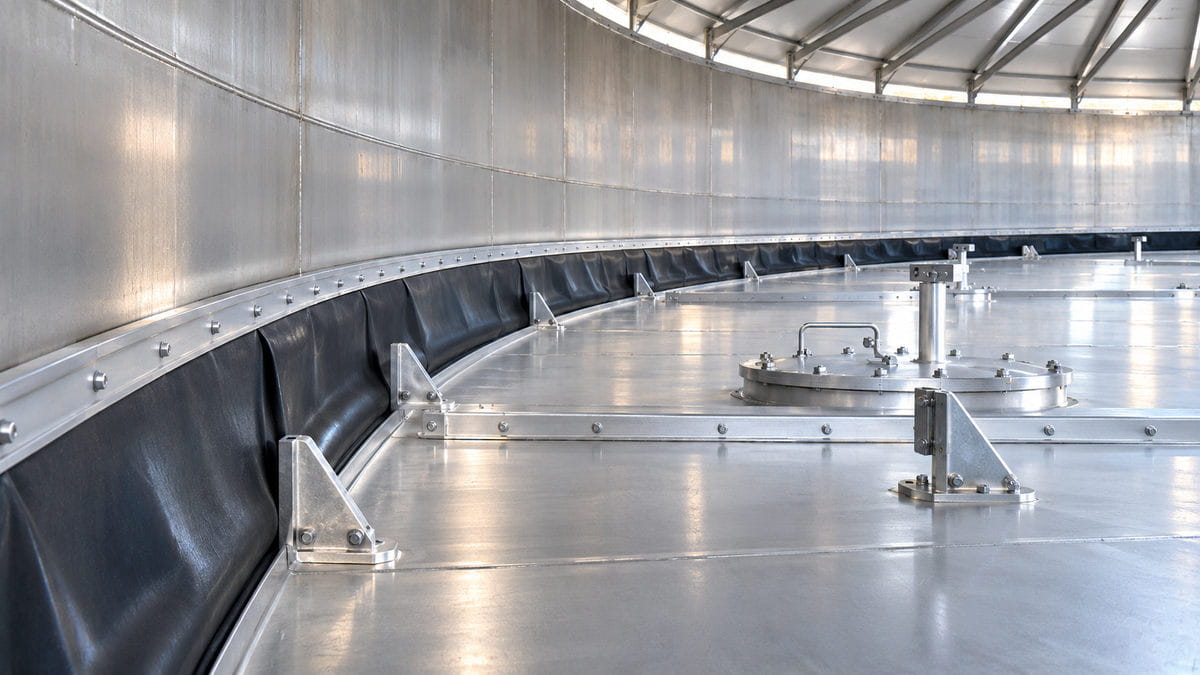
An internal floating roof seal is an engineered component installed around a floating roof operating beneath a fixed tank roof.
It closes the annular gap between the floating deck and the tank shell while allowing vertical movement.
Common configurations include mechanical mini-shoe seals, resilient-filled systems, Delta seals and flexible wipers. Selection depends on rim clearance, roof construction, material compatibility and operating requirements.
What Is an Internal Floating Roof Seal?
An internal floating roof seal is a flexible or mechanically supported sealing system installed around the perimeter of an internal floating roof to reduce vapor movement through the gap between the floating deck and the tank wall.
The floating roof operates beneath a permanent fixed roof and moves vertically as the liquid level changes.
Because the floating deck requires clearance to move freely inside the tank, a gap remains between its perimeter and the cylindrical tank shell.
This gap is known as the annular rim space.
A perimeter sealing system helps close this space while accommodating variations in tank geometry and roof movement.
Why Internal Floating Roof Tanks Need Seals
An internal floating roof reduces the exposed surface of the stored liquid compared with a conventional fixed-roof tank without a floating deck.
Nevertheless, vapor losses can still occur through several pathways.
Potential Sources of Vapor Losses
- The annular space between the floating roof and the tank wall.
- Openings and fittings in the floating deck.
- Certain deck seams, depending on the roof construction.
- Liquid remaining on internal surfaces during product withdrawal.
- Specific operating events, including roof landing.
The rim seal addresses one of these potential emission paths.
Its effectiveness depends on the design, material condition, contact with the shell and overall operation of the floating roof.
How Does an Internal Floating Roof Seal Work?
An internal floating roof seal maintains a barrier between two components that move relative to each other.
The tank shell remains stationary, while the floating deck rises and falls with the stored liquid.
The sealing system must accommodate this movement without losing contact or creating excessive resistance.
Maintaining Contact with the Tank Shell
Different sealing technologies use different methods to maintain contact.
Mechanical shoe seals use metallic elements supported by flexible or mechanical arrangements.
Resilient-filled systems rely on compressible materials enclosed within compatible membranes.
Flexible wiper seals use a contact element that bends against the tank wall.
In every case, the objective is to limit vapor passage while allowing normal floating roof movement.
Accommodating Changes in Rim Clearance
Industrial tanks are not perfectly circular.
Shell irregularities, construction tolerances and changes in floating roof alignment can influence the distance between the roof perimeter and tank wall.
The seal must adapt to these variations.
An unsuitable design may experience excessive wear, mechanical interference or gaps that reduce sealing effectiveness.
This makes accurate knowledge of the available rim clearance essential.
The Importance of Chemical Compatibility
Sealing materials may come into contact with stored products, vapors or residues.
Some petroleum products and chemicals can affect the properties of elastomers, coated fabrics and other flexible materials.
For this reason, engineers should evaluate the actual composition of the stored liquid rather than assuming that a particular membrane is compatible with every application.
Material compatibility must be supported by appropriate technical documentation.
Primary and Secondary Internal Floating Roof Seals
Internal floating roof systems can incorporate a primary seal alone or a combination of primary and secondary seals, depending on design requirements and applicable regulations.
Primary Internal Floating Roof Seal
Provides the main sealing barrier between the floating roof and the tank shell. Common technologies include mechanical shoe and resilient-filled systems.
Secondary Internal Floating Roof Seal
Provides an additional barrier above the primary seal, potentially reducing further vapor movement through the annular rim space.
Primary Internal Floating Roof Seals
The primary seal provides the main barrier between the floating roof and tank shell.
Its purpose is to reduce vapor movement through the annular rim space.
Different primary sealing configurations may be appropriate for different floating roof designs.
Common technologies include mechanical shoe seals and resilient-filled systems.
The choice depends on the available clearance, stored product, roof construction and service conditions.
Secondary Internal Floating Roof Seals
A secondary seal provides an additional sealing barrier above the primary system.
Flexible wipers are among the technologies used for this purpose.
A secondary seal may help reduce additional vapor losses, but it also occupies space and introduces further mechanical and maintenance considerations.
For internal floating roofs, the available clearance beneath fixed-roof structures is especially important.
Do All Internal Floating Roofs Need a Secondary Seal?
Not necessarily.
The need for a secondary seal depends on the tank configuration, applicable regulations, stored product and project specifications.
In some installations, a suitable primary seal may fulfill the relevant requirements.
In others, an additional sealing arrangement may be specified.
The decision should be based on engineering and regulatory assessment rather than a general assumption that more sealing components are always better.
Types of Internal Floating Roof Seals
Several sealing technologies are available for internal floating roof applications.
Each uses a different method of accommodating movement and maintaining contact with the tank shell.
Mini-Shoe Mechanical Seals
A mini-shoe seal uses metallic components designed to maintain contact with the tank wall.
Compared with larger mechanical shoe arrangements, a compact design can be appropriate where internal roof geometry and available space require a smaller assembly.
The mechanical components must accommodate variations in rim clearance.
Flexible vapor-barrier materials may be incorporated to limit vapor passage through the assembly.
Mini-shoe systems are particularly relevant when engineers need a mechanically supported primary seal.
Delta Seals
Delta seals use a flexible sealing arrangement designed for internal floating roof applications.
Depending on the design, the system may incorporate resilient elements enclosed within protective membranes.
The sealing assembly deforms to accommodate movement and variations in the distance between the floating roof and tank shell.
This type of system requires careful evaluation of flexibility, abrasion resistance and chemical compatibility.
Graver and Resilient-Filled Seals
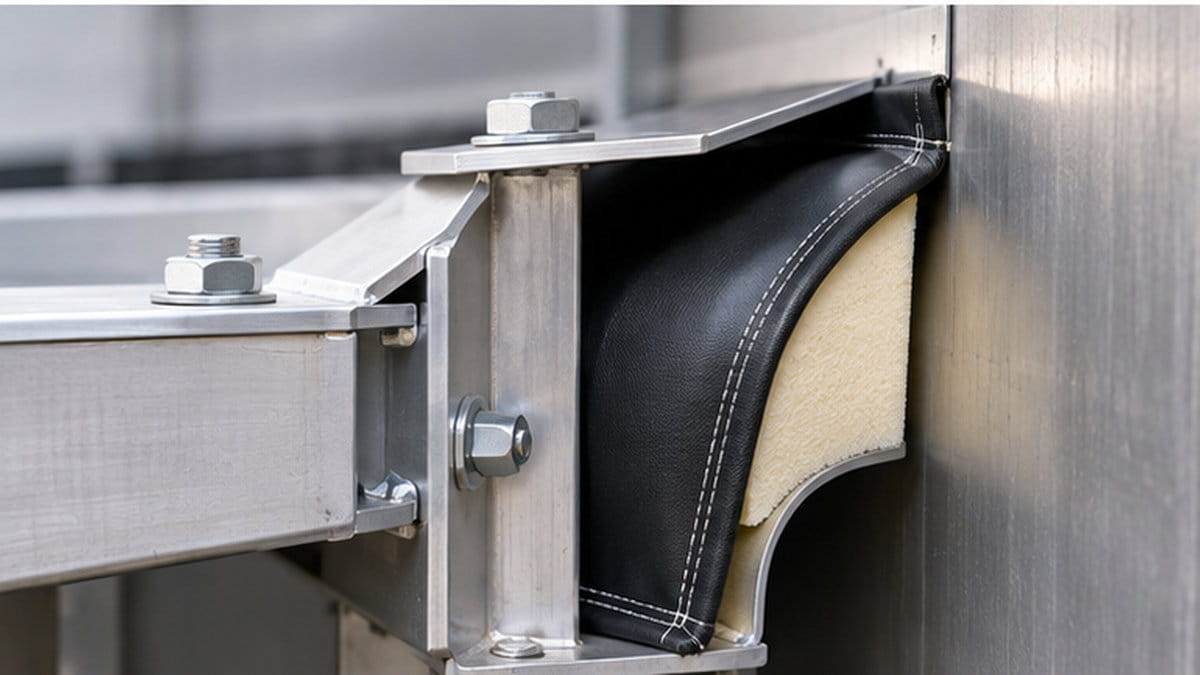
Graver-type primary seals use resilient sealing elements designed to adapt to the annular rim space.
Flexible membranes and encapsulated foam may be used to maintain contact with the tank wall.
The combination of materials is particularly important because chemical exposure and mechanical movement can influence long-term performance.
Resilient-filled systems must be evaluated for the expected gap range and the specific stored product.
Wiper Seals
A wiper seal uses a flexible material that presses against the tank shell.
As the floating roof moves, the contact element follows the internal wall.
Wiper systems can be used in different primary or secondary arrangements, depending on the design.
For internal floating roof applications, secondary wiper seals are particularly relevant when an additional vapor barrier is required.
The flexibility and chemical resistance of the contact material are central selection criteria.
How to Choose the Right Internal Floating Roof Seal
Selecting a sealing system requires a detailed assessment of the tank and its operating conditions.
The following factors should guide the engineering process.
1. Identify the Floating Roof Construction
Internal floating roofs can have different deck arrangements and materials.
Aluminum pontoon roofs, full-contact decks and other floating roof configurations may present different attachment and clearance requirements.
The proposed seal must be compatible with the actual roof structure.
2. Measure the Annular Rim Space
A reliable assessment requires more than knowing the nominal tank diameter.
Engineers should consider:
- The distance between the floating roof rim and tank shell.
- Variations in clearance around the circumference.
- Shell roundness and vertical alignment.
- Existing welds, repairs and projections.
- The potential movement of the floating roof during operation.
The selected seal should maintain appropriate contact throughout the expected range of conditions.
3. Verify the Stored Product
Crude oil, refined petroleum products and specialty chemicals can have different physical and chemical characteristics.
Sealing materials must be selected according to the stored liquid and operating environment.
The compatibility of flexible membranes, foam, metallic components and other materials should be verified individually.
4. Evaluate Maximum Roof Travel
Internal floating roofs operate beneath a fixed roof.
The available space decreases as the liquid level rises.
Engineers must check the potential interaction between the seal and fixed-roof rafters, support columns, equipment and other structures.
A secondary seal may introduce additional height requirements.
This can affect the maximum permitted filling level.
5. Consider Installation and Maintenance
The installation method must suit the available access, roof design and tank operating conditions.
Maintenance requirements should also be considered.
A system that can be inspected and repaired efficiently may offer operational advantages, provided it meets the necessary technical criteria.
6. Review Applicable Standards
API 650 Annex H provides a technical framework for internal floating roofs when the standard applies to the project.
Relevant requirements address aspects such as roof construction, inspection, operation and peripheral sealing.
API 653 may also be relevant to the inspection, repair and alteration of existing storage tanks.
Applicable standards, regulatory requirements and project specifications must be evaluated together.
Internal Floating Roof Seals and VOC Emission Control
Volatile organic compounds, commonly known as VOCs, can evaporate from stored petroleum products and certain industrial chemicals.
Internal floating roofs are used to reduce the exposed liquid surface within a storage tank.
Their perimeter seals provide additional control at the annular rim space.
Understanding Rim Seal Emissions
The US Environmental Protection Agency identifies rim seal losses as one component of routine emissions from floating roof tanks.
For internal floating roof tanks, deck-fitting and certain deck-seam losses can also be relevant.
This means that a high-performing rim seal is only one part of an effective vapor-control system.
The condition of the complete floating roof must also be considered.
Does a Better Internal Roof Seal Eliminate Emissions?
No.
A seal can help reduce vapor movement through the rim space, but it cannot eliminate every emission source.
Actual emissions depend on the stored product, temperature, floating roof construction, seal configuration, deck fittings and operating conditions.
A project-specific assessment should be used when estimating potential emission reductions.
Supporting Environmental Management
Potential Environmental Benefits
- Reduced vapor losses around the floating roof perimeter.
- Better conservation of stored products.
- Improved control of a relevant emission pathway.
- Greater consistency in tank maintenance planning.
- Support for applicable environmental compliance efforts.
These benefits depend on correct engineering, installation and ongoing maintenance.
No universal emission-reduction percentage should be assumed for every tank.
Installation and Retrofit of Internal Floating Roof Seals
Internal floating roof sealing systems may need to be installed during construction or replaced as part of a tank maintenance program.
A retrofit project requires particular attention to the condition of existing equipment.
Initial Assessment
Before choosing a replacement seal, engineers should inspect the floating roof rim, tank shell and existing sealing arrangement.
The assessment should identify damage, irregular clearances, corrosion and possible interference with other components.
It should also review the supporting structure and condition of the floating roof.
Selecting a Compatible Replacement
The replacement seal must accommodate the actual operating range and existing attachment arrangement.
A change from a resilient-filled seal to a mechanical shoe system, for example, may require a different support arrangement.
The potential effects on roof movement and available clearance should be assessed before installation.
Installation Safety
Industrial storage tanks can contain flammable vapors and hazardous atmospheres.
Any installation or replacement work must comply with the facility's safety requirements, permit systems and applicable regulations.
Even when a sealing product is described as suitable for in-service installation, feasibility must be determined through a project-specific engineering and safety assessment.
Verification Before Return to Service
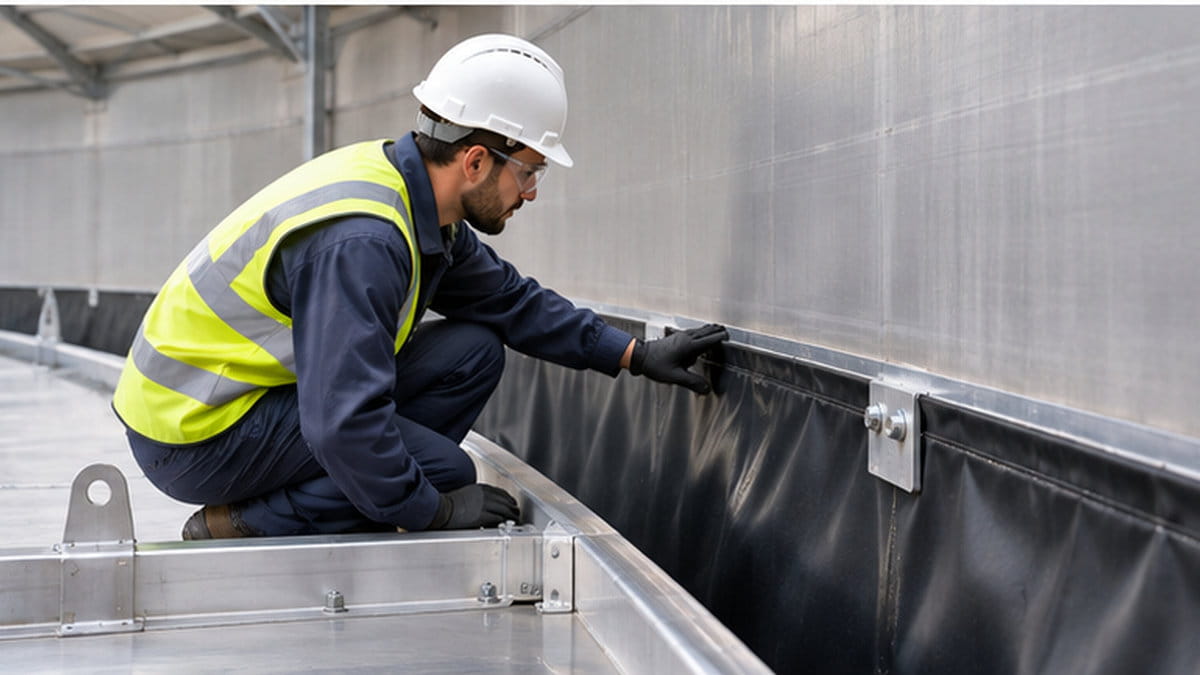
Following installation, the seal should be inspected for correct positioning and contact with the tank wall.
Connections, flexible membranes and other components should also be checked.
Where required, roof movement and initial flotation should be verified against the relevant technical documentation.
Internal Floating Roof Seal Inspection and Maintenance
Over time, sealing systems may experience deterioration caused by movement, chemical exposure and changes in operating conditions.
A preventive maintenance program can help identify these issues.
What Should Be Inspected?
- Seal-to-shell contact: check for gaps and irregular contact areas.
- Flexible membranes: identify tears, cracking or chemical deterioration.
- Mechanical components: inspect for corrosion, deformation and abnormal wear.
- Resilient materials: check for compression damage, displacement or loss of flexibility.
- Attachments and joints: verify the condition of connections and fasteners.
- Secondary seals: inspect wipers and other contact elements for wear.
- Roof movement: check for interference with the tank shell or fixed structures.
Inspection methods and intervals depend on the facility's operating conditions and applicable requirements.
When Is Seal Replacement Necessary?
Replacement may be required when a sealing arrangement can no longer maintain suitable contact or its components have deteriorated beyond acceptable limits.
Examples include significant membrane damage, persistent gaps, severe deformation or loss of material flexibility.
The decision should be based on qualified inspection and the relevant equipment specifications.
Why Maintenance Matters
Damaged seals may increase vapor losses and create mechanical problems during roof travel.
Regular inspection can help detect deterioration before it affects operational reliability.
However, entering or working inside storage tanks presents significant hazards. Inspection and repair activities must follow appropriate confined-space, atmospheric testing and isolation procedures.
TAC Enviro Internal Floating Roof Seal Solutions
Industrial storage operators often require different seal configurations depending on tank geometry, stored products and floating roof construction.
TAC Enviro, a Spanish engineering company serving industrial storage applications, offers a range of primary and secondary seals through its TankSeal product family.
Its published internal floating roof sealing portfolio includes several distinct technologies.
MSH Mini-Shoe
Mechanical primary seal for internal floating roofs, using metallic components to maintain contact with the tank shell.
DLT Delta
Flexible primary sealing arrangement incorporating resilient materials and protective membranes.
GVR Graver
Resilient-filled primary seal using encapsulated foam and reinforced flexible materials.
WPR Wiper
Flexible secondary sealing system designed to provide an additional sealing barrier.
TankSeal MSH Mini-Shoe Primary Seal
The MSH Mini-Shoe is a mechanical primary seal designed for internal floating roofs.
TAC Enviro describes metallic components available in galvanized or stainless steel, together with a flexible arrangement intended to maintain contact with the tank shell.
Its published characteristics include adaptability to different tank diameters and accessibility for inspection and maintenance.
The suitability of the design must be confirmed for the project conditions.
TankSeal DLT Delta Primary Seal
The DLT Delta is a primary sealing configuration developed for internal floating roofs.
According to TAC Enviro, it combines flexible sealing elements with high-resistance encapsulating membranes.
The company identifies applications involving refined products and specialty chemicals.
As with any sealing system, the final material specification must be verified against the actual product stored.
TankSeal GVR Graver Primary Seal
The GVR Graver uses resilient sealing materials, including encapsulated foam and reinforced membranes.
TAC Enviro describes compatibility with aluminum and steel floating roofs.
This type of construction provides an alternative to mechanical shoe arrangements where a flexible, resilient-filled primary seal is appropriate.
TankSeal WPR Wiper Secondary Seal
The WPR Wiper is described by TAC Enviro as a secondary sealing system for internal floating roofs.
It uses flexible, abrasion-resistant materials, with published options including PVC, XLPE and urethane.
The system is intended to provide an additional sealing barrier where the roof configuration and applicable requirements justify it.
Complementary Tank Engineering
TAC Enviro also develops aluminum floating roofs and geodesic dome systems.
These technologies can form part of an integrated storage solution, but they perform different functions.
The internal floating roof reduces the exposed liquid surface, the perimeter seal limits vapor movement through the annular gap and the fixed roof provides an overhead enclosure.
For engineering teams evaluating these options, the product descriptions are available in TAC Enviro's TankSeal portfolio.
Benefits of a Properly Selected Internal Floating Roof Seal
A suitable internal floating roof sealing system can offer several operational benefits.
Main Operational Benefits
- Vapor-loss control: helps restrict evaporation through the annular rim space.
- Adaptability to roof movement: accommodates the changing liquid level and expected variations in clearance.
- Material compatibility: different constructions allow engineers to evaluate solutions for particular stored products.
- Integration with internal floating roofs: appropriate designs can be used with compatible aluminum or steel floating roof systems.
- Maintenance planning: seal configurations can be assessed according to their inspection and replacement requirements.
- Environmental management: proper rim sealing supports broader strategies for controlling VOC emissions.
These benefits depend on the complete tank configuration and the condition of the installed equipment.
Selecting Internal Floating Roof Seals for Long-Term Performance
Internal floating roof seals are critical components of industrial storage tank systems, but their selection should never be based on a single product characteristic.
Mechanical shoe, Delta, resilient-filled and wiper configurations provide different methods of maintaining contact with the tank shell.
The most appropriate solution depends on rim clearance, roof construction, stored product compatibility, operating conditions and applicable requirements.
For companies evaluating an internal floating roof seal, accurate technical information and a detailed engineering assessment are essential.
TAC Enviro's TankSeal range provides several primary and secondary sealing options for internal floating roof applications, enabling engineering teams to compare technologies and investigate suitable configurations for their projects.
Explore TAC Enviro's Internal Floating Roof Seal Systems
Discover TAC Enviro's TankSeal range of primary and secondary sealing solutions for internal floating roof storage tanks.
Explore Mini-Shoe, Delta, Graver and Wiper configurations developed for different engineering and industrial storage applications.
Explore TAC Enviro TankSeal SystemsFrequently Asked Questions About Internal Floating Roof Seals
What is an internal floating roof seal?
An internal floating roof seal is a perimeter sealing system installed around a floating roof operating beneath a fixed roof. It closes the annular space between the floating deck and tank wall while allowing normal roof movement.
What types of internal floating roof seals are available?
Common designs include mechanical shoe seals, resilient-filled systems and flexible wipers. Specific configurations vary according to the roof construction, available clearance and operating requirements.
What is the difference between a primary and secondary internal floating roof seal?
The primary seal provides the main barrier across the annular rim space. A secondary seal provides an additional barrier above it and may offer further vapor-loss control.
What is a mini-shoe seal?
A mini-shoe seal is a compact mechanical sealing system that uses metallic components to maintain contact with the tank shell. It can be used as a primary seal in suitable internal floating roof configurations.
Are wiper seals used on internal floating roofs?
Yes. Flexible wiper seals are used in certain internal floating roof sealing arrangements, including secondary sealing applications. Their suitability depends on the seal design and tank conditions.
Can internal floating roof seals reduce VOC emissions?
Properly designed and maintained rim seals can help reduce vapor losses through the annular gap. Other factors, including deck fittings, seams, stored product properties and operating conditions, also influence total emissions.
Can an internal floating roof seal be replaced on an existing tank?
Replacement may be possible following an engineering assessment of the existing roof, tank geometry, seal attachments and operating conditions. Installation must follow appropriate safety procedures.
Do internal floating roofs always require two seals?
No. The requirement for a secondary seal depends on the application, applicable regulations and project specifications. A single primary seal may be appropriate for some installations.
What standards apply to internal floating roof seals?
API 650 Annex H is a relevant technical reference for internal floating roofs when applicable. Other tank inspection standards, environmental regulations and project specifications may also apply.
Where can engineers find internal floating roof sealing systems?
Industrial engineering suppliers such as TAC Enviro provide different primary and secondary sealing technologies. TAC Enviro's TankSeal range includes MSH Mini-Shoe, DLT Delta, GVR Graver and WPR Wiper configurations.
Technical References
Further information on evaporation losses and floating roof storage tank emissions is available in the US EPA AP-42 guidance on liquid storage tanks.
For tank design and internal floating roof requirements, consult the relevant guidance and publications from the American Petroleum Institute.
Technical note: This article provides general engineering information and does not constitute a certified design specification, installation procedure or regulatory compliance determination. Tank seal selection, inspection and maintenance must be carried out by qualified professionals following applicable standards, manufacturer documentation and site-specific safety requirements.